Unless you’ve been living in a bomb shelter these past few years, you’ve likely felt the squeeze at the pump, in the grocery aisle, and when the utility bill arrives. It’s the kind of pressure that follows you home, sits down at the kitchen table, and makes you reconsider what you can afford this month.
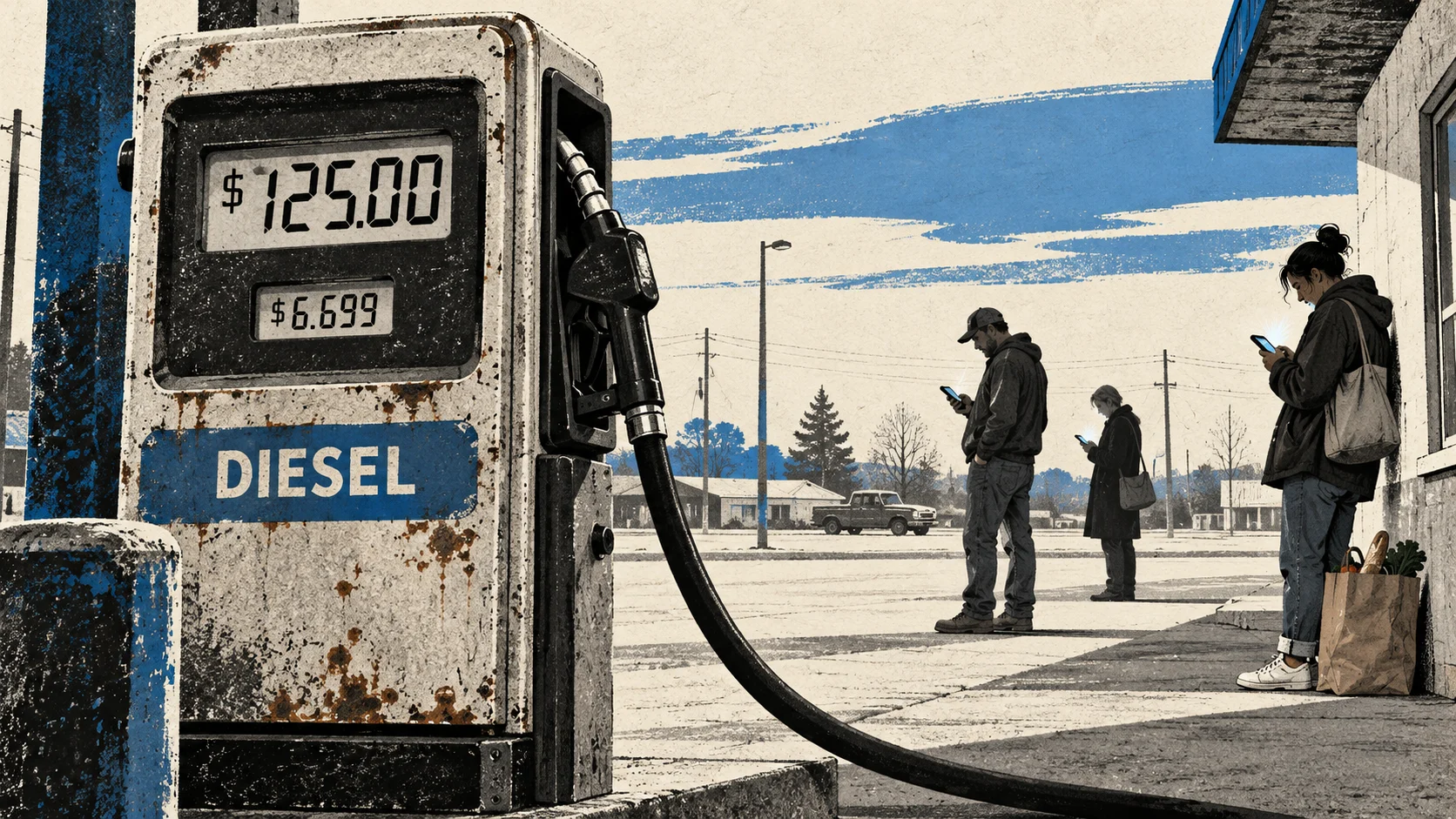
I just paid $125 to fill my diesel tank. At $6.699 a gallon, that’s nearly twice what I was paying a few years ago. Standing there watching the numbers climb, I wasn’t thinking about economic forecasts or political talking points. I was thinking about how much of an ordinary paycheck disappears before you’ve even bought groceries.
Sure, there are geopolitical reasons behind fuel prices. Supply disruptions, international conflicts, and decisions made far beyond our borders can all play a role. I understand that the President doesn’t set the price on the pump every morning.
But understanding why something happens doesn’t make it affordable. And it doesn’t excuse our leaders from explaining what they intend to do about it.
At what point does the pressure start to break the system? Maybe the better question is how many households have already reached their breaking point without the rest of us noticing.
The Quiet Arithmetic of Getting By
Economic hardship doesn’t always announce itself with a foreclosure sign or a business closing its doors. Sometimes it looks like a postponed dentist appointment. Sometimes it’s putting off new tires, canceling a trip to see family, or carrying a credit card balance that used to get paid off every month.
Those compromises can look small from the outside. Inside a household, they accumulate.
When fuel costs more, getting to work costs more. When groceries cost more, feeding your family takes a larger share of what’s left. Add housing, insurance, utilities, and an unexpected repair, and the room to maneuver gets pretty thin.
You can comparison-shop. You can cut subscriptions. You can cook at home and drive less. But there’s a limit to how much budgeting can accomplish when the essentials are the things consuming your income.
What frustrates me is how easily that reality gets reduced to advice about personal discipline. At some point, telling people to tighten their belts stops being useful. People want a little breathing room. They want to pay their bills, put something aside, and handle an ordinary emergency without turning it into a financial crisis.
That shouldn’t feel like an unreasonable expectation.
Where Is the Outrage?
I’ve been following reports of protests in Europe over the cost of living, including demonstrations that have turned violent. I’m not advocating riots. Destroying someone else’s livelihood does nothing to make your own more secure.
But I do wonder where the sustained public pressure is here in the United States.
We have a proud tradition of speaking up, organizing, and demanding answers. Yet so much of our frustration seems to end in private conversations, angry comments, or a resigned shake of the head at the checkout counter.
We complain, pay, and move on. Next week, we do it again.
Maybe people are too overworked and overwhelmed to do much else. If you’re trying to keep a job, raise children, and stay ahead of the bills, attending a meeting or organizing a protest can feel like one more demand on time you don’t have.
That deserves some understanding. It’s easy to ask why people aren’t in the streets when you aren’t the one who would lose a day’s pay to be there.
Still, I worry about what happens when exhaustion becomes permanent resignation. When we stop expecting anything better, it becomes much easier for the people in charge to offer us very little.
Distracted, Divided, and Worn Out
Then there’s the distraction.
We carry devices that can fill every spare moment with something to watch, argue about, or buy. There’s always another controversy, another clip, another reason to be furious for fifteen minutes before moving on.
I’m not above any of it. After a long day, I understand the appeal of sitting down and tuning out. Nobody can spend every waking hour engaged in public affairs.
But I do wonder how much of our attention gets consumed by arguments that have almost no bearing on whether we can afford our lives.
We can spend hours debating a politician’s latest remark while giving much less attention to the decisions that affect our monthly expenses. We can defend our preferred party with remarkable energy, then struggle to name what we expect it to deliver.
That’s a comfortable arrangement for politicians. If every criticism can be dismissed as an attack from the other side, accountability becomes optional.
I don’t want to hear that everything is fine because someone’s preferred party is in charge. I don’t want a list of excuses that changes depending on who occupies the White House. I want leaders to acknowledge the strain, explain their choices, and give us something concrete by which to judge their performance.
Symbolism Doesn’t Pay the Bills
Against that backdrop, watching the President spend time on which geographical locations should be renamed feels especially irritating.
Whatever someone thinks of those proposals, it’s fair to ask how much attention they deserve while people are struggling with ordinary expenses. A new name on a map won’t lower my grocery bill. It won’t make the next tank of diesel easier to afford.
Presidents can address more than one issue at a time. But priorities show up in what leaders repeatedly choose to talk about, promote, and celebrate.
When symbolic disputes dominate the conversation, I want to know what happened to the practical questions. What can the government realistically do? What are the tradeoffs? What will take time, and what can be addressed now?
An honest answer might be complicated. It might even be disappointing. I would still rather hear it than another distraction packaged as an accomplishment.
Frustration Needs Somewhere to Go
I don’t pretend there’s a single policy that will suddenly make everything affordable. Anyone selling an effortless solution deserves scrutiny.
But complexity cannot become a permanent excuse for inaction. And frustration, by itself, doesn’t produce much either.
Peaceful protest has a place. So do calling representatives, showing up at public meetings, asking specific questions of candidates, and paying attention after an election is over. Those things are less entertaining than an online argument. They also require more of us.
We should be willing to press the people we voted for just as hard as the people we voted against. Supporting a candidate doesn’t mean handing them an exemption from criticism.
For me, the expectation is straightforward: take the cost of ordinary life seriously. Explain what you can do about it. Be honest about what you can’t. Then let the public judge the results.
Until then, I’ll keep watching the total climb at the pump and wondering how much more people can absorb.
The $125 fill-up ends when I put the nozzle back. The question follows me home: how expensive does ordinary life have to become before we demand more from the people asking to lead us?
No comments yet